The 5 3 2 Instagram Rule and Why Musicians Should Care
What the 5 3 2 Rule Actually Means
The 5 3 2 rule is not an official Instagram policy or a feature buried in the app's settings. It is a content-cadence framework that circulates in creator and marketing communities, and it assigns daily posting targets across the three main content formats Instagram supports: five Reels, three Stories, and two feed posts (typically carousels or single images). The logic is straightforward: each format reaches your audience in a different context, and hitting all three every day keeps you present wherever a fan might happen to look.
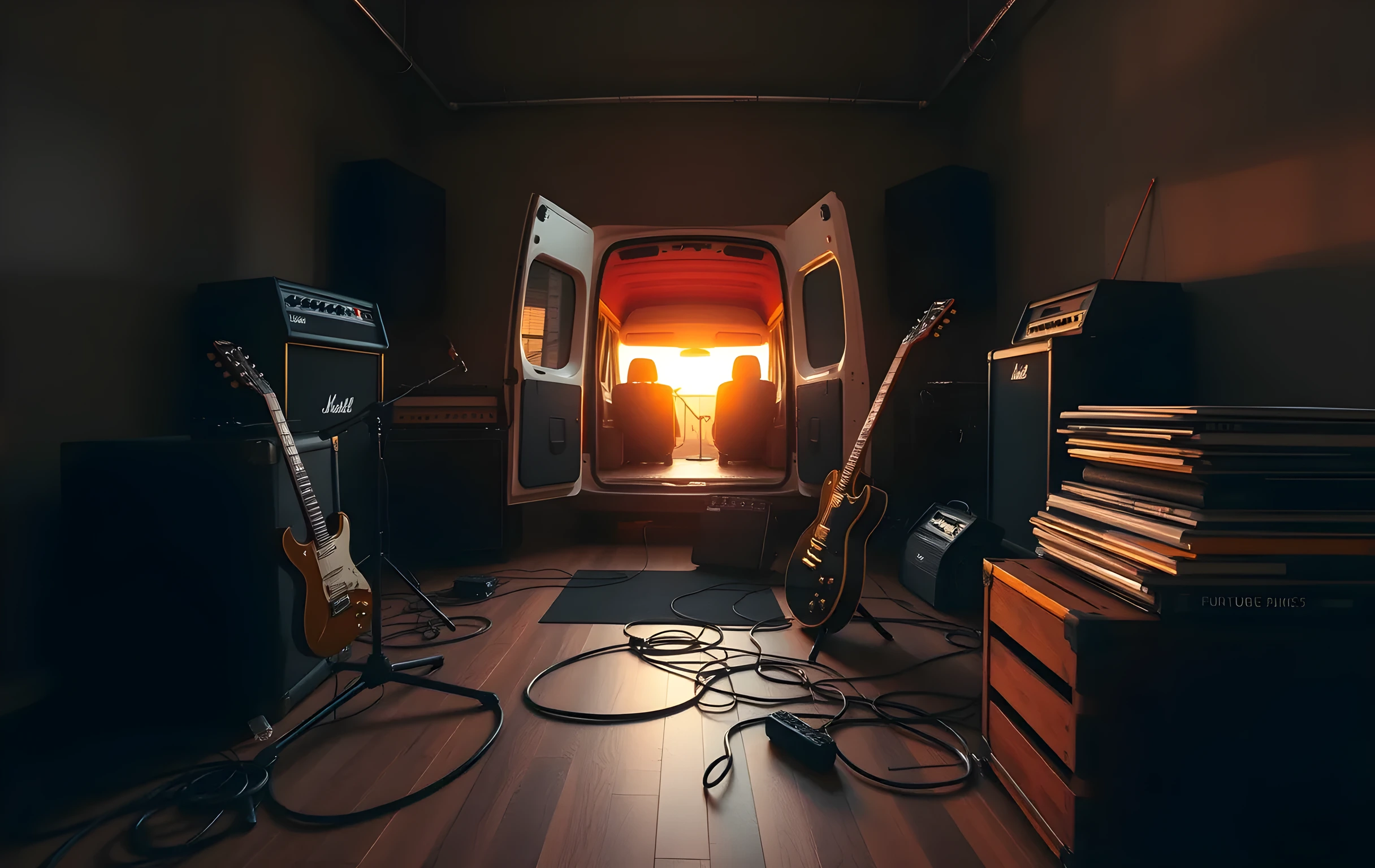
For an independent musician, the rule functions as a production schedule. Five Reels means you need at least five short-form video ideas per day, even if they are as simple as a ten-second clip of a riff, a behind-the-scenes shot of a rehearsal, or a text-overlay post explaining a lyric. Three Stories is where your existing followers see you between releases: a poll about which B-side to drop next, a quick audio snippet from the studio, a photo of the van packed for a Tuesday show. Two feed posts anchor your profile grid with something more considered, like a carousel breaking down the story behind a new single or an image set from a live gig.
The number five in front of Reels is deliberate. Reels is where Instagram invests its most aggressive distribution because it is the format that competes with TikTok and YouTube Shorts. The algorithm surfaces Reels to non-followers far more readily than it surfaces feed posts or Stories, which makes Reels your primary discovery engine. Posting five a day is not about perfection; it is about volume and variety so that at least one of those five lands in front of someone who has never heard your name.
Why Each Format Does Different Work
Stories and feed posts are relationship formats. They reach people who already follow you, and they reward consistency over virality. A Story that says 'we just nailed the bridge in rehearsal' does not need to be cinematic; it needs to feel like the listener is standing in the room with you. That intimacy is what converts a passive follower into someone who shows up to your Thursday night show at the small venue or adds your next EP to their Spotify playlist. Three Stories a day keeps that thread of casual, low-pressure connection alive without asking your audience to commit to a full video.
Feed posts sit in the authority lane. A carousel explaining the production choices on your latest single, or a six-image set from a weekend tour documenting the venues, the soundchecks, the crowd, tells a story that has staying power. Unlike a Story that vanishes after twenty-four hours, a feed post lives on your profile and is one of the first things a new listener sees when they finally find you through a Reel, a playlist mention, or an AI-assisted search asking 'who should I listen to for indie folk with synths?' That last detail matters more than it did two years ago, because tools like ChatGPT and Perplexity increasingly summarize and recommend artists based on the breadth of their public web presence, and your Instagram grid is part of that signal.
Reels, as noted, are the discovery layer. But within those five daily Reels, variety is the lever. One might be a thirty-second performance clip with no talking head. Another could be a split-screen of you playing a chord while a text overlay names the progression. A third might be a raw, handheld shot of the band arguing about tempo in rehearsal, which reads as authentic and human. The algorithm does not reward one single style of Reel; it rewards the account that gives it multiple angles to test against different audience segments. Five attempts a day means you are running a small experiment every morning, and the data from views, shares, and saves tells you which angle your audience actually responds to.

Making the Cadence Work for a Working Band
The honest problem with the 5 3 2 rule is that most independent musicians are not full-time content creators. You have rehearsals, gig nights, studio sessions, day jobs, and the ongoing mental load of writing songs that do not sound like everyone else. Trying to produce ten distinct pieces of content every single day from scratch is a recipe for burnout within three weeks. The workaround is batching and repurposing, and it changes the entire workflow.
A practical weekly rhythm looks like this: on Monday, you film forty-five minutes of rehearsal and capture fifteen to twenty short clips. On Tuesday, you record three or four quick audio snippets in the studio. On Wednesday, you shoot a photo set from the most recent gig or a new piece of artwork. You then spread those raw assets across the week. A single rehearsal session can yield five Reels (a riff, a drum fill, a band joke, a tempo discussion, a final run-through), three Stories (a poll about the song title, a behind-the-scenes audio note, a countdown to the live date), and one or two feed carousel slides. You are not creating ten pieces of content; you are creating four to six raw assets and cutting them into nine or ten deliverables.
The key psychological shift is separating the creative act from the publishing act. The creative act is making music, being in the room with your band, feeling the amp. The publishing act is slicing that experience into Instagram-native formats, writing a caption, adding a hashtag set, and hitting post. If you treat the second act as a fifteen-minute daily task rather than a creative obligation, the 5 3 2 rule stops feeling like a second job and starts feeling like what it actually is: a distribution habit for work you are already doing.
Where the Rule Fits in Broader Discoverability
Instagram is one node in a much larger discoverability network, and the 5 3 2 rule only works if the other nodes are functioning. A Reel that gets two hundred thousand views means nothing to your long-term career if the listener cannot find your music on Spotify, Apple Music, or YouTube within thirty seconds of clicking through. Your metadata needs to be clean: correct artist name across every platform, accurate genre tags, a consistent bio that a search engine or an AI recommendation engine can parse. If someone asks Perplexity or Google AI Overviews 'best new indie rock artists with atmospheric guitar work,' the answer is built from your web footprint, and a messy or contradictory online presence will cost you that mention.
This is where the 5 3 2 rule connects to a larger strategy. The Reels are your top-of-funnel: they put your name in front of people who do not know you exist. The Stories and feed posts are your mid-funnel: they build enough familiarity that when the listener goes looking for you on streaming platforms, they recognize the artist name and hit play. And the bottom of the funnel is the booking pipeline, where a promoter or venue owner finds you through a search, checks your social following as a proxy for local draw, and sends an email. None of those steps work in isolation, and the 5 3 2 rule is only the Instagram slice of a findability system that also includes clean streaming metadata, a functional website, press materials, and a consistent release schedule.
The broader point is that 'being found' is no longer a passive outcome. In the past, you could put out an EP, play a handful of shows, and wait for the slow accumulation of word of mouth. Now the discovery layer has expanded to include AI-generated recommendations, algorithmic playlist curation, and search engines that synthesize answers from your entire digital footprint. The 5 3 2 rule is one practical way to feed that system with regular, varied, human content so that when the question 'who should I check out next?' gets asked in a ChatGPT conversation or a Perplexity thread, your name is part of the answer because there was enough consistent, searchable signal for the model to draw from.
Starting Small and Scaling What Works
You do not need to hit five Reels on day one. If your current output is two posts a week, start at 3 2 1: three Reels, two Stories, one feed post per day for two weeks. Track which format drives the most new profile visits, because that is your actual discovery channel, and lean into it. A band of folk songwriters might find that their Stories with audio snippets outperform Reels, meaning their audience already knows them and just needs a reason to listen again. A techno producer might find that a single well-edited Reel of a live set outperforms five talking-head clips, meaning the visual texture of the performance is the hook.
After two or three weeks of data, scale up one format at a time. Move from 3 2 1 to 5 2 1, then to 5 3 1, and only then to the full 5 3 2. Each step should feel like adding a small daily task, not overhauling your entire routine. And if a particular week is heavy with touring or studio work, dropping to 3 2 1 is not failure; it is triage. The rule is a target, not a test you pass or flunk. The underlying principle is that consistent multi-format presence outperforms sporadic bursts of effort, and the specific numbers are just a starting scaffold you adjust to your reality.
The musicians who benefit most from this approach are the ones who treat it as infrastructure rather than performance. You are not posting to get claps; you are building a searchable, browsable, human-feeling presence that makes it easy for the right listeners, the right bookers, and the right algorithmic or AI-assisted recommendation to find you and understand what you do. The 5 3 2 rule is one of the most concrete ways to do that on Instagram, but its real value is in the habit it builds: a daily, low-friction commitment to showing up, staying visible, and making sure that when someone asks who they should listen to next, there is enough of you out there to be found.