Seeing Who Searched Your Name Is Impossible But Tracking Demand Isn't

Google Does Not Share Individual Searcher Names
This is not a privacy-nerd detail; it is structural. Google's search infrastructure is built so that the query log and the user identity are never exposed to the entity being searched. Your name, your band's name, your venue's name none of it gets attached to a searchable trail that a third party can pull. There is no API, no paid tier, no enterprise dashboard that says 'on March 12th, four people in Portland looked up [your artist name].' That data simply does not leave Google's servers in any form you or I can access.
The same holds for the newer AI-assisted search surfaces. When a booker asks an AI tool to recommend artists for a folk night, or when a fan types 'who is that band that played the Brooklyn show last month,' the conversation is logged on the user's side and processed through Google's or the provider's own pipeline. Neither you nor your manager gets a notification, a hit counter, or a name. The system is designed to answer the question for the person asking, not to report back to the subject of the question.
So if someone on social media tells you they have a tool that shows exactly who googled you, treat that claim with the skepticism you'd give any 'hack' video. The data does not exist in a form that can be handed to an independent artist. What exists is aggregate volume, and that is where your real intelligence lives.
What Branded Search Data Actually Tells You
Google Search Console is the closest you will get to a demand thermometer for your name. Once you verify your artist website or domain, the console breaks down queries into branded searches (people typing 'River & Pine live' or 'River & Pine setlist') and non-branded searches (people typing 'indie folk band for wedding reception'). The branded number is your truest measure of active intent: someone already knows your name and is trying to find a specific piece of information. A spike in branded queries the week after a local radio play or a venue's social post tells you that the exposure converted into curiosity.
You will also see impressions, average position, and click-through rate for each branded query. An impression without a click means people saw your name in the results but chose a different link, often a Spotify embed or a YouTube clip. That is not a failure; it tells you where the conversation is actually happening. If most of your branded traffic routes to streaming platforms rather than your own site, that is a signal to make sure your Spotify artist page and YouTube channel are as complete and searchable as your website.
For independent musicians who do not yet have a dedicated domain, the practical move is to claim your profile on the major platforms and then verify whatever small site or booking page you do have. Even a simple one-pager with your name, genre, location, and a booking contact gives Google Search Console something to index and gives you a baseline branded-query number to track month over month.
The New Layer: AI Tools Answering About You
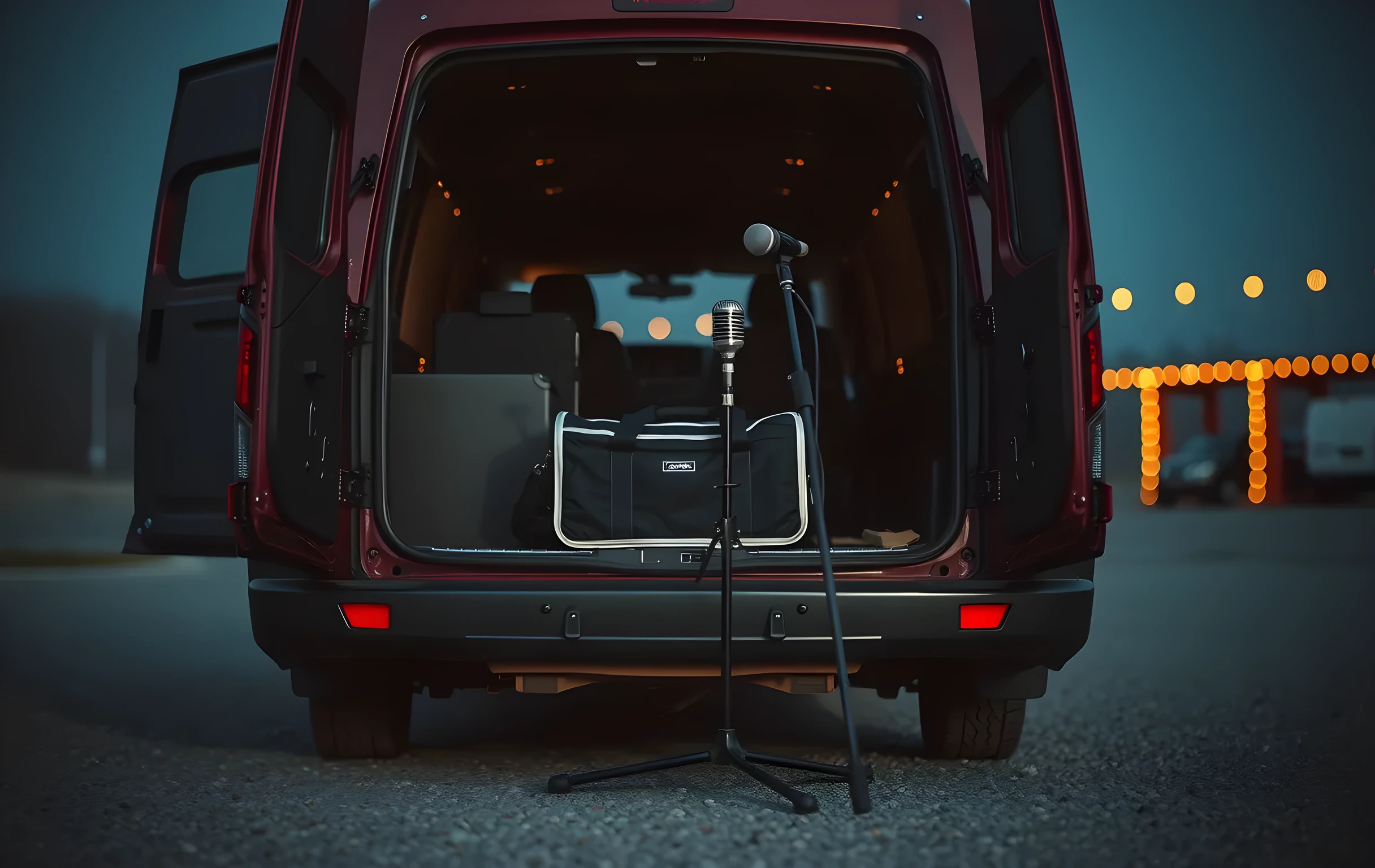
A quiet shift has happened in how people discover artists. A venue programmer no longer just types 'best jazz trio Boston' into a search bar; she asks an AI assistant to shortlist five acts, compare their booking fees, and draft a first email. A fan at a wedding does not flip through a band directory; she tells her phone 'find me a live folk duo for forty guests.' The answer they get is synthesized from whatever the model has ingested: your website copy, your press kit, your Spotify bio, your YouTube descriptions, any Wikipedia or Wikidata entry, forum threads, and local event listings.
You cannot see who asked. You cannot see how many times your name surfaced in an AI-generated shortlist versus a competitor's. What you can do is check what those tools actually say about you. Type your artist name into the major conversational assistants and the AI-overview panels on search results pages, read the answer out loud, and ask yourself: does that description match the act I want to be booked for? Are my genre tags, location, and availability reflected accurately? If the tool describes you as 'a solo guitarist' when you are a five-piece band with horns, that is a findability gap you can close by tightening your metadata, your website copy, and your platform bios.
This check takes ten minutes and should be part of your monthly routine alongside looking at streaming analytics. The AI layer is where the next wave of booking conversations will happen, and showing up there with an accurate, specific, well-structured description of your act is now as basic as having a working email address was in 2005.
Measuring Whether People Are Actively Finding You
Since you will never get a name-by-name log of searchers, the practical metric is action. Did someone who found you through any channel actually do something? On Spotify for Artists you can see where new followers come from, which tracks they stream first, and whether they came in from a playlist, a direct search, or an external link. YouTube Analytics breaks down impressions into 'search' versus 'suggested,' telling you how many people typed your band's name directly versus stumbled on a cover video. Those are the closest proxies to 'someone looked me up and then listened.'
For booking-specific intent, track your inquiry form fills, direct email opens from new addresses, and phone calls that start with 'I saw you at [venue] and I want to book you for [date].' A spreadsheet with date, source, and outcome is unglamorous but it is the single clearest picture of whether visibility is converting into revenue. Pair that with your branded Search Console queries and you have a two-layer view: top-of-funnel awareness (people typing your name) and bottom-of-funnel intent (people reaching out to book).
If those numbers are flat, the problem is rarely that nobody is searching for you. It is usually that when they do search, the first three results do not make it obvious who you are, what you sound like, and how to hire you. Fixing the top-of-funnel presentation is almost always faster and cheaper than trying to manufacture more searches.
Findability Beats Searcher Tracking Every Time
The desire to see who googled you comes from a very human place: you want to know if the work is landing, if someone in a room is paying attention. That feeling is valid, and the aggregate data will confirm it for you. But chasing an individual-level log of searchers is a dead end that no tool will solve, because the infrastructure was never built to hand that information to the subject.
What you can control is the quality of what appears when someone does type your name, ask an AI about your genre, or scroll through a venue's shortlist. A consistent artist name across Spotify, Apple Music, YouTube, your website, and your social profiles. A bio that states genre, location, band size, and booking contact in the first two sentences. Clean metadata so that when a machine assembles a description of you, it has the right raw material. That is the whole game, and it is entirely in your hands.
People cannot choose what they cannot find. Your job is not to count the searchers; it is to make sure that the next person who types your name, asks an AI for a recommendation, or reads a venue's program sees exactly the act you want them to book. Do that consistently and the branded-query line in Search Console will do its own quiet climbing, month by month, without you ever needing to know a single first name.